
16 min read · Updated: 2026-11-28
Choose a rope toy that is too large for your dog to swallow, has sturdy, tightly secured strands, and offers a comfortable grip for both of you. Match its length and construction to your dog’s size and tug style, then keep play supervised. Stop if the toy frays, unravels, or loses pieces.
Rope toys can make tug games interactive, but no design is chew-proof. A good fit lets you hold the toy without putting your hands near your dog’s mouth, while giving your dog room to grip and pull without straining.
Use the checklist below to compare knots, handles, and simpler designs, and to check for damage before and after play. Remove the toy when you cannot supervise or when loose fibers and broken sections make it unsafe.
- Choose a rope your dog can grip comfortably that is too large to swallow.
- Use it for supervised tug, keeping your hands clear and pulls gentle.
- Compare knots, handles, and simple designs by grip and ease of inspection.
- Remove ropes with loose fibers, unraveling strands, or missing pieces.
Why rope toys suit some kinds of play
A shared game, not a solo chew
A rope toy is most useful when you want to play tug together, rather than leave a dog alone with something to gnaw. You can hold one end and guide short pulls, pauses, and releases. This interaction makes supervision part of the game, not an afterthought.
- Use rope toys for supervised games, not unattended chewing.
- Choose a toy your dog can grip without straining.
- Pause play if your dog stops responding or the rope shows damage.
Tug can suit dogs who enjoy gripping and pulling, but enthusiasm varies between individuals. Start with a brief, calm exchange and watch whether your dog stays responsive to pauses. If the game becomes frantic or your dog ignores cues, put the toy away and try again later.
Keep the toy moving gently from side to side rather than jerking it upward or twisting your dog’s neck. Let your dog pull against steady resistance, and release tension if either of you loses balance. A tug toy should support comfortable play, not force a contest of strength.
Keep play predictable
Set a simple rhythm before tug begins: invite a grip, pull steadily, pause, then offer a release cue. This gives your dog clear chances to stop and helps you avoid pulling while the toy is caught awkwardly. Keep sessions short enough that attention and control remain easy to maintain.
Hold the rope away from your dog’s face and avoid swinging it around to build excitement. If teeth touch your hand, stop moving the toy and calmly reset your grip. Do not yank it away from your dog’s mouth, since a sudden pull can make contact more likely.
Some dogs prefer a toy they can chase, carry, or mouth gently instead of pulling against a person. Follow your dog’s response rather than insisting on tug, and put the rope away if play causes distress. If your dog tends to swallow fabric or string, ask a veterinarian about safer play options.
How to choose the right size and construction
Fit the rope to your dog
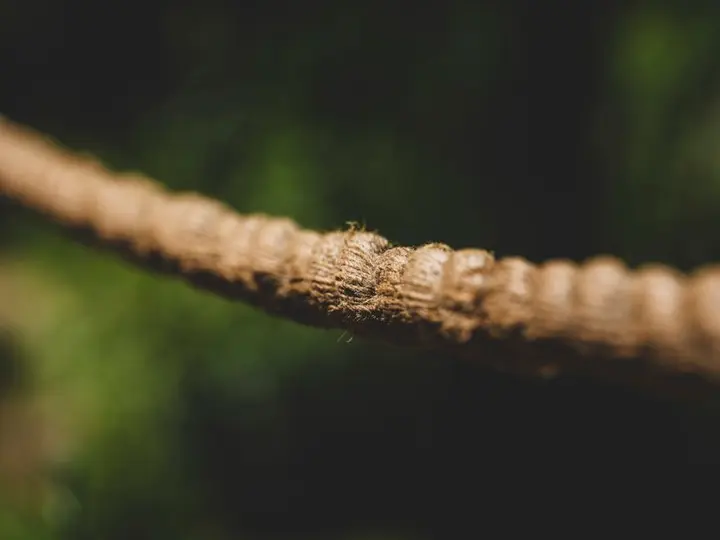
Pick a rope that is long enough for you to hold one end while your dog grips the other, with space between your hand and its teeth. The toy should also be too large to disappear into your dog’s mouth. Check the maker’s sizing guidance, then judge the fit against your dog’s actual grip.
- Check the maker’s guidance for your dog’s size.
- Make sure the rope is too large to swallow.
- Confirm you can hold it clear of your dog’s teeth.
- Reject a fit that looks awkward or difficult to grip.
A small dog may find a thick, heavy rope awkward to carry or tug, while a large dog may quickly overpower a narrow, short one. Look for a design your dog can comfortably grasp without swallowing the end. Avoid choosing by breed label alone; individual mouth size and play style matter.
If your dog grabs the toy close to your hand, choose a longer design or use a handle that keeps your fingers clear. A longer rope is not automatically safer, though: loose ends can catch or trail, so supervise and put the toy away between games.
Check how strands are secured
Inspect how the strands are braided, twisted, or knotted, and look for loose ends that can be pulled apart easily. A compact, consistent construction is simpler to assess than a rope with unraveling sections. No weave guarantees safety, so check the toy regularly as your dog plays.
Feel along the rope for weak spots, sharp or stiff sections, and knots that have begun to loosen. A knot can help keep a toy together, but it is not a substitute for sound construction. If the rope separates into long strands, remove it rather than trimming and returning it to play.
Materials and finishes vary, so read the product information for cleaning guidance and any cautions about use. Do not assume a rope is suitable for chewing simply because it feels sturdy in your hand. The dog’s teeth and pulling habits can wear fibers faster than a quick first inspection suggests.
Comparing knots, handles, and simple rope designs
Choose a grip that works
Knotted ropes offer obvious places for a dog to grip, while a plain braided length may be easier for you to hold and inspect. Handles can give your hand a separate gripping point, but check that they do not bring your fingers too close to your dog’s mouth. Choose the shape that supports controlled, comfortable pulls.
A large knot may suit a dog that likes to carry or mouth a defined end, but it can make the toy heavier and less manageable for smaller dogs. A simpler design may feel easier to swing or hold during short games. Compare the whole toy, not just its most eye-catching knot.
For example, a medium-sized dog that enjoys short, steady tug games may do well with a braided rope and one compact knot at each end. The owner can hold one knot while the dog grips the other, then pause before either end loosens. A handle would add little if it makes the toy awkward to store.
| Design | Useful feature | Check before choosing |
|---|---|---|
| Knotted rope | Defined grip points | Check knots for looseness |
| Handle rope | Separate hand grip | Keep fingers clear of teeth |
| Plain braid | Simple to inspect | Confirm ends are easy to hold |
Weigh each design tradeoff
Treat each design as a tradeoff rather than assuming one style is best for every dog. Knots create grip points but add bulk, handles separate your hand from the main rope but can change the feel, and simple designs are easy to inspect but may offer fewer places to hold.
A dog that grips the middle may pull a plain rope away from your hand, so look for ends you can hold securely. If your dog mouths knots aggressively, inspect those areas closely for loosened fibers. Choose a design that you can keep steady without wrapping the rope around your fingers or wrist.
Put the toy down and compare its usable grip, not just its shape on a shelf. If you cannot hold it comfortably while keeping your hand clear of your dog’s teeth, select another design. The best option is one both of you can manage during calm, supervised play.
Check the whole rope before each game, then inspect it again when play ends.
Spot wear before it becomes a swallowing risk
Inspect before and after play
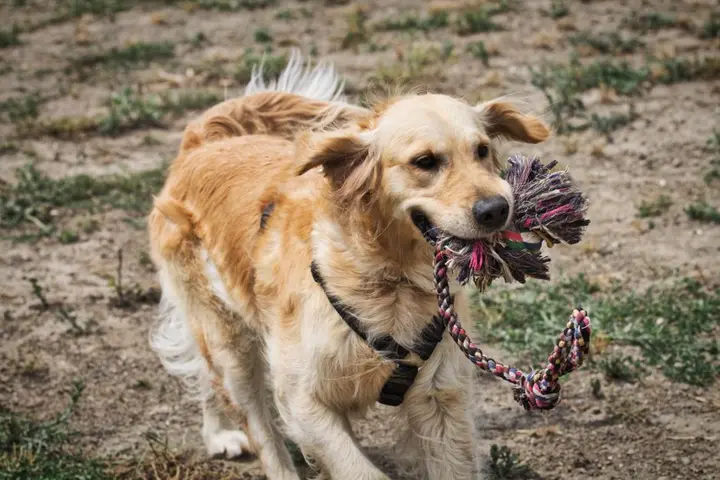
Check the whole rope before each game, then inspect it again when play ends. Look for frayed strands, loose knots, torn braiding, and missing pieces, paying particular attention to the ends your dog grips. A quick look can catch damage that makes the toy unsuitable for another round.
Separate the strands gently with your fingers to see whether the braid stays together. If the rope opens into loose fibers, a knot shifts under light handling, or a section has been chewed away, take the toy out of use. Do not wait for the damage to spread during the next game.
Watch your dog while tugging, too, because a toy can change quickly once teeth catch a strand. Stop play if the rope begins to unravel or your dog starts pulling fibers free. Collect loose pieces from the floor and keep the damaged toy away from other pets.
Replace damaged rope promptly
Replace a rope toy when it has loose strands your dog can pull off, knots that no longer hold, or sections missing after chewing. Cutting away frayed ends does not restore the original construction, and the shortened toy may become easier to swallow. When in doubt, choose a new toy rather than extending its use.
Store rope toys out of reach between supervised games, especially if your dog keeps chewing after tug ends. This prevents unsupervised access to fibers and makes it easier to notice changes next time. Keep damaged toys separate from toys that are still in good condition.
If you think your dog swallowed rope fibers or part of a toy, contact a veterinarian promptly and describe what is missing. Do not wait for symptoms or try to manage a possible blockage at home. Keep the remaining toy available to show what material and size may have been swallowed.
Keep tug play supervised and controlled
Set clear start and stop cues
Begin tug only when your dog is calm enough to take the toy gently, and end the game before excitement turns into grabbing hands or clothing. Use a consistent cue to start and another to release, then reward the release with praise or a brief pause. If your dog cannot settle, put the rope away and try later.
- Pulling sharply can strain a dog’s neck; use smooth, low movements instead.
- Letting the dog keep the rope after play invites unsupervised chewing; store it out of reach.
- Continuing when the dog grabs hands increases risk; pause and reset the game.
Keep the rope between you and your dog, with hands well away from the mouth and knots. Move the toy smoothly from side to side rather than jerking it upward or twisting your dog’s neck. If your dog pulls hard, lower the pace and let go rather than trying to win through force.
If you serve customers in a specific area, Local Seo Services can help keep your business profile and location information consistent. For the game itself, choose a space with secure footing and enough room to move without striking furniture, children, or other pets. Put away the rope when play ends so it is not available for unsupervised chewing.
- Use a clear start cue.
- Practice a calm release cue.
- Pause when arousal rises.
- Put the toy away after play.
Read your dog’s signals
Watch your dog’s body language throughout the game, not just at the start. A loose body and responsive pauses usually make play easier to manage, while stiff posture, frantic grabbing, or ignoring familiar cues are reasons to stop. Give your dog space to calm down before deciding whether to resume.
Keep tug sessions brief enough that your dog can still respond to you. A short pause lets you check whether the dog will release the rope and re-engage calmly, rather than escalating into harder pulling. If the dog repeatedly misses the cue, finish the session and choose a quieter activity.
Children should not manage tug games unless an adult is directly supervising and the dog is reliably gentle with them. Even a friendly dog can catch fingers while reaching for a moving rope. Ask children to stand back, and have the adult hold the toy by its handle or end, away from the dog’s teeth.
If you also run a local pet shop

Keep store details consistent
Make sure customers can confirm your shop’s address, opening hours, and contact details before setting out. Check that the same information appears across your business profile and store pages, especially after a move or a change in hours. Leicester Seo Services may help a local pet shop make accurate store details easier for nearby customers to find.
Describe what shoppers can actually expect when they visit, including whether rope toys are available in store or online. Keep location pages specific to real, staffed shops, and avoid implying that a product is available locally unless your stock information supports that claim. Clear details reduce wasted trips and help customers ask useful questions before visiting.
For rope toys, useful product information can include the material, approximate dimensions, construction, and whether the item is intended for supervised play. Explain that dogs vary in chewing strength and that tug toys need inspection. These details help a shopper compare options without suggesting that any toy is indestructible or suitable for every dog.
Answer practical buyer questions
Use product descriptions to answer the questions shoppers are likely to ask at the shelf: how long the rope is, where to hold it, and what signs mean it should be replaced. A clear photo beside a ruler or familiar object can help communicate scale, but written dimensions remain useful when screens distort image size.
Explain how the toy is meant to be used without promising that it will prevent chewing damage or last indefinitely. For example, state that it is for supervised tug play and should be removed if strands loosen. Practical limits build trust because buyers can judge whether the toy suits their dog’s habits.
Invite staff to give consistent guidance when customers ask about size or durability. A simple explanation of toy length, dog size, and chewing style is more useful than calling a rope toy universally tough. Keep the guidance focused on fit and supervision, and recommend stopping play if the dog starts swallowing fibers.
Make product information easy to verify
Describe materials and dimensions
List the rope’s measured length and width, and explain whether that measurement includes handles or knots. Show the construction clearly in product images, including joined ends and any seams or attachments. For pet-gear sellers reviewing online product information, Seo Services can support content and technical improvements to an ecommerce site.
- ☐ Verify dimensions against the physical product.
- ☐ Check material wording against specifications.
- ☐ Show all ends, handles, and joins.
- ☐ Place supervision guidance near the description.
Use plain material descriptions drawn from the product specification, rather than vague claims such as “non-toxic” or “indestructible” unless you can substantiate them. If a product has care instructions or a stated use limitation, put that information where shoppers can see it before purchase. Do not imply that appearance alone proves a toy is safe.
Separate facts from recommendations: dimensions and materials are product details, while guidance about supervision reflects how the toy should be used. State that dogs differ in mouth size and chewing behavior, so buyers need to assess fit and inspect the toy during use. Clear wording helps readers make a decision without treating a general description as a guarantee.
- State dimensions and what they include.
- Name materials as specified by the maker.
- Show knots, ends, and attachments clearly.
- Put use limits beside the product details.
Make claims easy to check
Avoid claims that cannot be confirmed from the product itself, such as a promise that a rope will withstand every dog’s bite. Explain what the seller can verify and what owners must judge during play, including whether the toy is an appropriate size and whether strands remain intact.
Keep product names, images, and descriptions aligned. If a photo shows a specific color or shape, note whether the item supplied may vary, and do not use an image that hides a small handle or loose attachment. A mismatch can lead shoppers to choose the wrong toy for their dog or intended game.
Review product details whenever a supplier changes a design or material. An updated rope can differ in length, knot placement, or construction even when its listing name stays the same. Correcting the description and images together helps buyers compare products accurately and gives staff a reliable reference when answering questions.
Build a safer routine for rope-toy play
Check the toy before play
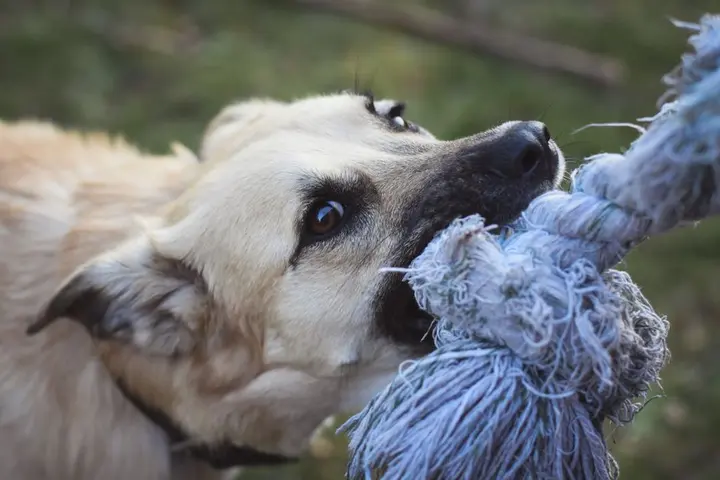
Make a quick inspection part of every tug session, even when the rope looked fine the last time you used it. Check for loose strands, frayed ends, damaged knots, and any pieces that could detach. If you find damage, remove the toy instead of trimming it and assuming the remaining rope is sound.
Look over the whole toy, including the parts hidden inside knots and around handles. A damaged area may become more noticeable when the rope is pulled, so gently examine it before handing it to your dog. Do not pull hard on a weak section to test it; that can worsen the damage.
Choose a replacement when the rope is unraveling, coming apart, or small enough that your dog could swallow a piece. Stop using it if your dog begins chewing off fibers, even if the toy still appears intact overall. Dispose of damaged toys where your dog cannot retrieve them, and offer a suitable replacement only during supervised play.
Store and replace thoughtfully
Put the rope away after play in a place your dog cannot reach. This separates supervised tug from solo chewing and makes it easier to notice wear before the next session. Keep damaged toys out of the dog’s toy basket, since a familiar item may still invite chewing even after you have decided it is no longer usable.
Choose a replacement based on your dog’s current size, mouth, and play style rather than assuming the old dimensions will always suit. A growing dog may need a longer toy, while a dog that has started shredding rope may need a different kind of supervised activity. Recheck the fit when behavior or strength changes.
Keep the routine simple: inspect, play with clear cues, pause when control slips, and put the toy away afterward. This creates repeated chances to catch damage and prevents a tug toy from becoming an all-day chew. If your dog swallows rope fibers or seems unwell after chewing, contact a veterinarian for advice.
Frequently asked questions
Can puppies play tug with a rope toy?
Puppies can often enjoy gentle tug, but choose a toy they can hold without swallowing or getting tangled, and keep play calm and closely supervised. Use smooth, low movements rather than lifting or twisting the puppy. Stop if the puppy starts chewing off fibers, becomes overexcited, or cannot release the rope when prompted, and ask your veterinarian if you have concerns about age or development.
Should I let my dog chew the rope after tug?
It is safer to put a tug rope away when the game ends, particularly if your dog likes to shred or swallow fibers. Tug toys are not automatically suitable for unsupervised chewing, and loose strands can create a swallowing risk. Offer a separate chew product intended for that purpose if appropriate, and supervise according to its instructions and your dog’s habits.
How long should a rope toy be for tug?
Choose a rope long enough to keep your hands clear of your dog’s mouth, while still being manageable to control. Knots and handles affect the usable length, so check the full dimensions and consider where you will hold it. Your dog’s size and play style matter too; a toy that is too short or difficult to grip may make safe play harder.
Can I wash a rope toy?
Follow the product’s care instructions, since materials and construction vary. Washing may remove dirt, but it does not restore frayed fibers or weakened knots, so inspect the rope after cleaning and let it dry fully before use. If the toy has started to unravel, smells persistently unpleasant, or has damaged parts, replace it rather than relying on washing to make it safe.
Make supervision part of the game
A suitable rope toy is only one part of safe tug play. Choose a manageable size and sound construction, use controlled movements, and keep your attention on your dog rather than the toy alone. A clear release cue and a dependable end to each session make it easier to stop before excitement turns into rough grabbing or chewing.
Before your next game, check the rope from end to end, clear the play area, and decide where you will store it afterward. During play, pause if your dog stops responding or the toy begins to fray. Replace damaged rope promptly, and keep tug toys for supervised games rather than leaving them available as everyday chews.


